






What makes up your business water charges?

A business water bill is made up of seven components: water and wastewater standing charges, water and wastewater unit rates, surface water drainage, highways drainage, and a retail fee. The wholesaler sets each component, your retailer adds the retail fee, and your total reflects all seven combined.

The seven line items on every business water bill

Every business water bill in England and Scotland breaks down into seven separate charges. Some are fixed. Some scale with how much water you use. And some have nothing to do with what comes out of your taps.

ChargeWhat it isSet by
Water standing chargeA fixed daily fee for being connected to the water supply, regardless of usage. Larger meters carry higher standing charges.Wholesaler
Wastewater standing chargeA separate fixed fee for the sewerage connection. Listed as its own line, even though most people assume it is bundled in with water.Wholesaler
Water unit rateThe per-cubic-metre price for water you actually use. This is the line that scales with your meter reading.Wholesaler
Wastewater unit rateA per-cubic-metre charge for water that leaves your site as waste, usually calculated as 95 percent of your water volume. Often the largest single line on the bill.Wholesaler
Surface water drainageA charge for rain landing on your roof, car park, or other hard surfaces and entering the public sewer. Set by drainage band, not by rainfall.Wholesaler
Highways drainageA charge for road run-off in your area that ends up in the sewer system. Calculated regionally, with no direct link to your specific site.Wholesaler
Retail feeCovers customer service, billing, and account management. The only line you can change by switching retailer.Retailer

Of the seven, six are wholesale charges. Only the retail fee is set by the retailer you have contracted with, and it is the only line that changes when you switch.

Wholesaler versus retailer, and who sets what

Two companies are involved in every business water account. The wholesaler is the regional water company that owns the pipes and treatment infrastructure: Severn Trent in the Midlands, Thames Water in London, Scottish Water across Scotland, and so on. They set the first six line items above, following the schedule of charges that Ofwat approves.

The retailer is the company that actually bills you. You can be billed by Castle Water, Wave, Pure Utilities, Water Plus, or any of the dozen-plus retailers in the deregulated market. They handle customer service and the account, but they pass the wholesale charges through unchanged.

When you switch business water suppliers, you are only changing the retail fee. The wholesaler stays the same, the standing charges stay the same, the unit rates stay the same. The retail fee on most accounts is small in absolute terms, but it can make a meaningful difference at scale across multi-site portfolios.

Why two bills with the same usage can look different

Same volume of water does not mean the same bill. Several variables can move the total even when nothing about how you use water has changed.

VariableHow it affects your bill
RegionEach of the 11 wholesale regions in England sets its own schedule. Same volume in Newcastle and London produces different bills.
Drainage bandCharged by site characteristics, not usage. A site with more impermeable area pays more, even on a day it uses no water.
Contract statusA site on a deemed tariff (no signed contract) carries a higher retail fee than a negotiated agreement.
Wastewater calculationThe 95 percent assumption can be wrong if your business uses water in production, irrigation, or anything that does not return to the sewer.
Meter accuracyEstimated reads can inflate or deflate the unit-rate charge. Several months of estimates and the bill stops reflecting reality.

How to read your bill in five minutes

Pull out your most recent bill and work through it line by line.

  1. Find the seven items. They might be grouped or labelled differently depending on the retailer, but all seven should be there. If something is missing, that is worth a phone call.
  2. Check the standing charges against your meter size. Bigger meters mean higher standing charges. If you have a 25mm meter and the bill shows the rate for a 50mm one, you are being overcharged.
  3. Verify the unit rate. Match it against your contract document, or against the retailer’s published deemed schedule if you are not on a contract.
  4. Look at the wastewater volume. It should be either an exact percentage of your water volume (often 95 percent) or a separately measured figure if you have a wastewater meter.
  5. Check the surface and highways drainage. Both should reflect the actual character of your site. A flat-roofed warehouse with a large car park pays more than an open yard with permeable surface.

If anything looks off, the retailer is the first port of call. If they cannot resolve it, the next step is usually a water audit, which can identify backdated overcharges going back up to six years.

When a charge looks wrong

The five most common issues we see on business water bills are:

IssueWhat’s happening
Drainage band misclassificationSites are placed in the wrong band when they are first set up, and the error then runs for years.
Estimated reads building upSeveral "E" reads in a row produce a bill that no longer matches reality.
Wrong meter size on fileStanding charges are charged at the wrong band when meters are upgraded but the records are not.
Deemed tariff applied indefinitelyAccounts that should have moved onto contracts roll on at deemed rates for years.
Wastewater on a site that does not drain to sewerSome sites soak away rainwater on-site or drain to a watercourse, which means no surface drainage charge should apply.

The first step is always to raise a query with the retailer. Most retailers have to respond within ten working days under CCW’s complaint code. If the issue is technical or the retailer cannot reach a resolution, the regulator (CCW for water complaints, MOSL for market issues) is the next stop. For backdated refunds, an audit by an independent broker is usually the most effective route.

Frequently asked questions

Why does my business water bill have so many separate charges?

The structure goes back to how the deregulated water market is set up. The wholesaler runs the physical infrastructure and the retailer runs the customer relationship. Splitting the bill into seven lines means each charge can be independently regulated, audited, and challenged.

Can I switch retailer to lower these charges?

Switching changes only the retail fee. Six of the seven charges are wholesale and do not move when you switch. The bigger savings usually come from auditing the wholesale lines for errors, not from switching retailer.

Why is the wastewater charge so close to my water charge?

Because wastewater is typically calculated as 95 percent of your water volume. If your business uses water in cooling, irrigation, or evaporation, the calculation can be wrong and you may be due a refund.

What is the difference between standing charges and unit rates?

Standing charges are fixed and you pay them regardless of how much water you use. Unit rates scale with consumption.

Is there VAT on business water?

Most business water is zero-rated for VAT depending on your standard industrial classification (SIC) code. Some industries pay standard-rate VAT. Your retailer can confirm the rate that applies to you.

Why is my drainage charge higher than my neighbours?

Surface and highways drainage are calculated by site characteristics, not usage. A site with more impermeable area drains more rainwater into the public sewer and pays more.

See where you could save on your water bill

The retail fee is the only line you can change by switching. Get a quote against your current setup in under 24 hours.

Compare now

woman looking over and paying the utility bill with a laptop, and calculator

Water supply charges don’t tell the full story

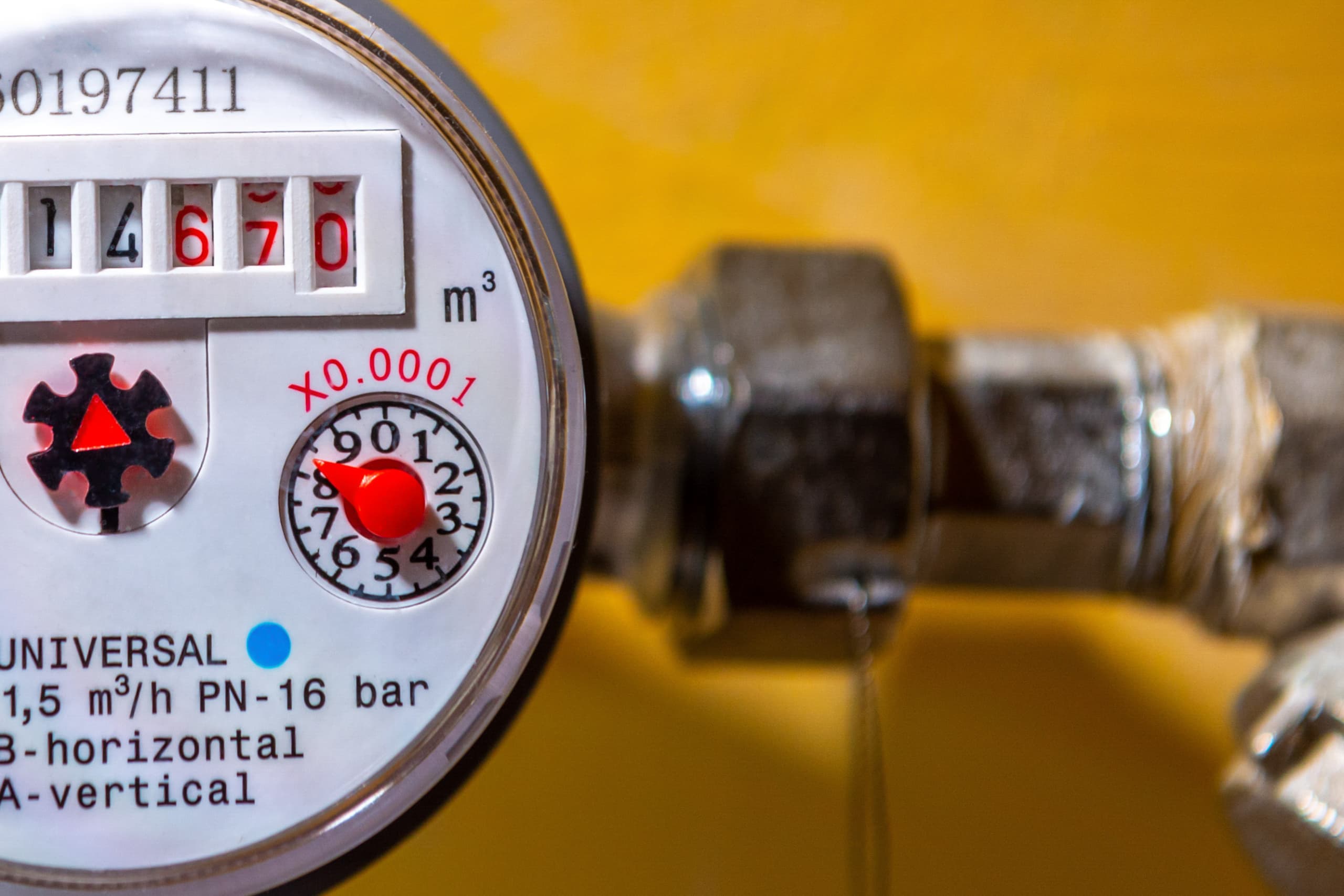
The starting point is the cost of supplying clean water to your premises. For most businesses, this is measured by a meter and charged per cubic metre, so there’s a clear, predictable relationship between consumption and cost over time.

If your property isn’t metered, the charges are based on rateable value instead. That figure comes from historic property assessments rather than current usage, which means the cost can feel disconnected from how your site actually operates today, particularly if occupancy or usage patterns have changed over time.

Even though this is the most straightforward part of the bill, it only reflects the water coming into your site. It doesn’t account for how that water is discharged, how your site interacts with the sewer network, or the fixed costs attached to maintaining the wider system. That’s where the rest of the bill begins to build.

Wastewater charges follow usage, but aren’t measured directly

Once water leaves your premises, it enters the sewer network and needs to be transported and treated. Wastewater charges cover that process and can typically make up a substantial portion of the overall bill.

In most cases, discharge isn’t measured directly. Instead, suppliers estimate it based on your water usage, applying a standard assumption about how much of that water returns to the sewer. For many businesses, that assumption sits somewhere around the 90–95% mark, although it varies depending on the setup.

That approach works at scale, but it does mean the charge is based on a calculated figure rather than an exact measurement. If your business uses water in ways that don’t fully return to the sewer, such as evaporation, product incorporation or irrigation, the estimate may not perfectly reflect what’s happening on site.

Surface water drainage is driven by your site, not your usage

Separate from everything happening inside your building is how rainwater drains from your property. Surface water drainage charges are what your water supplier charges to take away the rainwater that falls onto your site and drains into the public sewer, including from roofs, yards and other hard surfaces. That water is then transported through the network, treated, and returned to rivers or the sea.

This element isn’t linked to consumption at all. It’s usually based on the size, layout or classification of your premises, which means two sites with similar water usage can have very different drainage costs depending on their footprint.
In practice, this is often where our customers see a disconnect between effort and outcome. You can reduce usage inside the building and still see no movement in this part of the bill, simply because it’s tied to your site’s physical characteristics rather than operational behaviour.

Some businesses will see additional elements on top

Depending on how your site operates, there may be further charges included alongside the core components. Trade effluent is the most common example, and it’s where wastewater differs from standard domestic discharge, requiring additional treatment.

In those cases, charges are calculated separately and take into account both the volume and the composition of the effluent. This is typically relevant for sectors like manufacturing, food production or processing, where water is used as part of the product or operational process.

In England, there’s also a structural split between wholesale and retail charges. Wholesale relates to the supply and treatment infrastructure, while retail covers customer-facing services such as billing and account management. Both are combined within the final bill, but come from different parts of the market.

The way bills are presented doesn’t always make things easier

There isn’t a single standard format for business water bills, and that can make interpretation more difficult than it needs to be. Charges might be listed individually, grouped together or described using slightly different terminology depending on the supplier.

That variation makes it harder to compare sites or quickly sense-check whether a bill looks in line with expectations. It also means some elements can sit in the background without being reviewed because they’re not clearly broken out.

For that reason, it’s worth taking the time to separate each component and understand what it relates to. With a clear view of how your water bill is built, it becomes much easier to see whether it reflects how your site actually operates or if something doesn’t quite add up.

Spotting hidden costs in your water bills

If something looks out of step, whether that’s a sudden increase, a figure that doesn’t match your expectations or a charge that doesn’t seem relevant to your site, you’ve got a clearer starting point for questioning it. In some cases, it will come down to how the charges are applied. In others, it could point to issues such as incorrect tariffs, meter inaccuracies or underlying leaks that haven’t been identified.

There’s also a simpler explanation. You could just be paying more than you need to. We see it all the time. Unfortunately, many businesses across the UK have been overcharged for years because no one has taken a proper look at how accounts are set up or even considered switching business water suppliers.

Peace of mind with a business water audit

That’s where we come in at The Business Water Shop. We can conduct a detailed review of your usage, billing, and tariffs to uncover errors, inefficiencies, and missed savings. We’ll go through your meter data and historic invoices to check everything lines up with how your site actually operates.

If we find that you’ve been overcharged, we handle the entire process for you. That includes reviewing past bills, raising and managing the claim with your supplier, and securing any refund owed. We can help you claim back up to six years of overpayments, which can equate to thousands of pounds.

There’s no upfront cost, and the initial review is quick. All you need to do is share a recent bill, and we’ll take it from there. If you’d like to find out whether you’re paying more than you need to, simply fill out our online form today or get in touch with our team on 020 8038 4862 to get started.

Compare business
water rates today!

Homepage Postcode